

The air you breathe indoors is shaped by far more than paint fumes or cleaning products. Moisture, dust, pollen, mold spores, and even exhaust from your driveway can travel from your yard straight into your living room through open doors, poor drainage, and gaps in your home’s exterior. Many homeowners spend thousands upgrading air filters or air purifiers without ever addressing the outdoor sources that keep polluting their indoor air in the first place. U
nderstanding how your landscaping, roof, driveway, and other exterior features affect indoor air quality gives you a smarter, more lasting way to breathe easier at home.
Lawn Irrigation Habits and Indoor Humidity Levels
Overwatering your lawn or garden beds does more than waste water and stress your plants. Excess moisture near your foundation seeps into crawl spaces and basements, raising indoor humidity and creating conditions where mold and dust mites thrive. If your sprinkler heads spray too close to your siding or run too frequently, that water finds its way indoors through tiny cracks and vents.
Working with the best sprinkler company in your area can help you design a watering schedule and head placement that keeps moisture where it belongs, in the soil around your plants rather than against your home. A properly calibrated system also reduces runoff, which in turn limits the standing water that breeds mosquitoes and mold near entry points. Small adjustments to spray patterns and timers can make a measurable difference in how humid your basement feels during peak summer months.
Buried Plumbing Leaks and Soil Moisture Buildup

Not all moisture problems start above ground. A slow leak in an underground supply line or sewer connection can saturate the soil around your foundation for months before you notice anything wrong indoors. That trapped moisture eventually migrates through concrete and framing, feeding mold colonies that release spores into your home’s air supply.
Licensed plumbing contractors can perform camera inspections and pressure tests to catch these hidden leaks before they become expensive, air-quality-damaging problems. Signs worth watching for include unusually green or soggy patches of lawn, a sudden spike in your water bill, or a musty smell near lower-level rooms. Catching a leak early often costs a fraction of what mold remediation and structural repair would run later.
Roof Condition and Attic Moisture Control
Your roof is your home’s first line of defense against rain, snow, and humidity, and its condition directly affects the air quality in the rooms below it. Damaged shingles, cracked flashing, or clogged ventilation allow water to seep into the attic, where it saturates insulation and encourages mold growth that spreads through shared air ducts.
A qualified residential roofer can assess whether your attic ventilation is balanced correctly and whether your shingles are still doing their job of shedding water effectively. Poor attic airflow traps heat and moisture together, which is a near-perfect recipe for mold and mildew even in a roof that looks fine from the ground. Scheduling a roof inspection every few years, especially after major storms, helps you catch small issues before they turn into indoor air problems.
Exterior Surface Buildup and Airborne Allergens
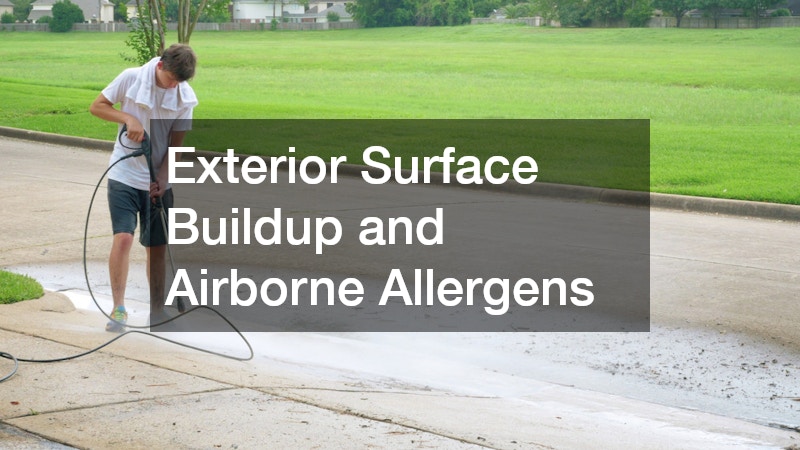
Mold, algae, pollen, and dust accumulate on driveways, siding, and patios over time, and every gust of wind or foot traffic can stir these particles into the air near your doors and windows. A single windy afternoon can send airborne spores and dust drifting straight through an open window or an imperfectly sealed door frame, giving them a direct path into your living space.
This is especially noticeable in shaded, humid climates where green or black staining on concrete and vinyl siding is common. That greenish film is typically algae, while dark streaking often signals mold or mildew, both of which release microscopic spores as they grow and dry out. Homes near tree cover, sprinkler systems, or areas with poor drainage tend to see this buildup faster, sometimes within just a few weeks during peak humidity season.
Foot traffic makes the problem worse than most homeowners realize. Shoes that cross a mildew-stained porch or pollen-dusted walkway can track particles directly onto entryway flooring, where they get kicked back into the air with every subsequent step. Pets add another layer, picking up allergens on their paws and fur before shaking them loose indoors.
Routine power washing, at least once or twice a year, can significantly reduce this buildup before it becomes airborne. Paying close attention to north-facing or shaded walls, where sunlight rarely reaches to dry out moisture, can catch problem areas before staining spreads.
Mold spores, pollen, and dust mite debris settle into siding, brick, and concrete over time, and every gust of wind or footstep near the house can knock loose particles that eventually make their way indoors. Hiring pressure washing companies to clean these surfaces on a regular schedule removes the buildup before it becomes airborne and drifts inside through open windows or on shoes and pet paws.
Timing matters as much as frequency. Scheduling a cleaning in early spring, before pollen counts spike, and again in late fall, after leaves and organic debris accumulate, tends to catch allergens at their peak buildup points. Homes near wooded lots or busy roads may need an extra cleaning midyear, since tree pollen and vehicle exhaust residue collect faster in those settings.
Regular cleaning also extends the life of your siding and hardscaping, which is a helpful side benefit beyond air quality alone. Removing algae, mildew, and grime prevents the slow degradation that leads to costly repairs, and it keeps paint and sealants performing as intended for years longer.
Most homeowners find that a thorough cleaning once or twice a year keeps allergen levels noticeably lower during high-pollen seasons. For households with asthma or severe allergies, some pressure washing companies offer quarterly plans, and pairing exterior cleaning with gutter maintenance and window washing can further reduce the pathways allergens use to reach indoor air.
Vehicle Exhaust and Garage Air Infiltration
If your garage is attached to your home, exhaust fumes, oil residue, and chemical off-gassing from stored products can drift into your living space through shared walls, doors, and ductwork. This is a bigger problem than most homeowners realize, since even a few minutes of a running engine can leave detectable pollutants in indoor air for hours.
Choosing home EV charger installation is one practical way to reduce this risk, since electric vehicles produce no tailpipe emissions while charging or idling in the garage. This swap not only cuts down on exhaust exposure but also reduces the volatile organic compounds that gasoline and oil leaks introduce to the air. Sealing the door between your garage and living areas is another simple step that pairs well with this kind of upgrade.
Fence Placement and Airflow Around Your Property

Fencing does more than mark property lines and add privacy; it also influences how air, dust, and pollen move around your home. A solid fence placed too close to your house can trap stagnant, humid air against your exterior walls, while a poorly placed fence near a busy road may fail to block dust and vehicle particulates from reaching your windows.
A knowledgeable fence company can help you choose materials and spacing that support natural airflow rather than blocking it, which matters more than most homeowners expect. Louvered or semi-permeable fencing designs, for example, let breezes pass through while still filtering out larger debris. Thinking about airflow when planning a new fence can make a noticeable difference in how much outdoor dust settles near your doors and windows.
Flooring Choices and Trapped Outdoor Contaminants
What happens outside your home eventually gets tracked indoors, and your flooring plays a bigger role in trapping or releasing those particles than you might think. Carpet fibers hold onto dirt, pollen, and mold spores far longer than hard surfaces, recirculating them into the air every time someone walks across the room.
Investing in hardwood floor installation sanding refinishing gives you a smoother, sealed surface that is far easier to clean thoroughly and doesn’t harbor allergens the way carpet does. A properly sanded and sealed hardwood floor also resists moisture absorption, which limits the mold growth that can occur when humid outdoor air makes its way inside. Regular sweeping and damp mopping of refinished floors removes far more airborne debris than vacuuming a carpeted equivalent.
Detached Structures and Stored Material Off-Gassing
Sheds, workshops, and detached garages often become storage spots for paint, solvents, fertilizer, and other chemicals that off-gas slowly over time. When these structures sit close to your home or share ventilation paths, those fumes can migrate indoors, especially during warm weather when chemical evaporation speeds up.
Working with an experienced garage builder to plan proper ventilation and separation from your main living space reduces the chance that stored chemicals affect your indoor air. Good design includes vented storage areas, sealed doorways between structures, and adequate distance from air intake vents on your home. Taking inventory of what you store and disposing of old chemical products responsibly further reduces this hidden source of pollution.
Gutter Maintenance and Foundation-Level Mold Prevention
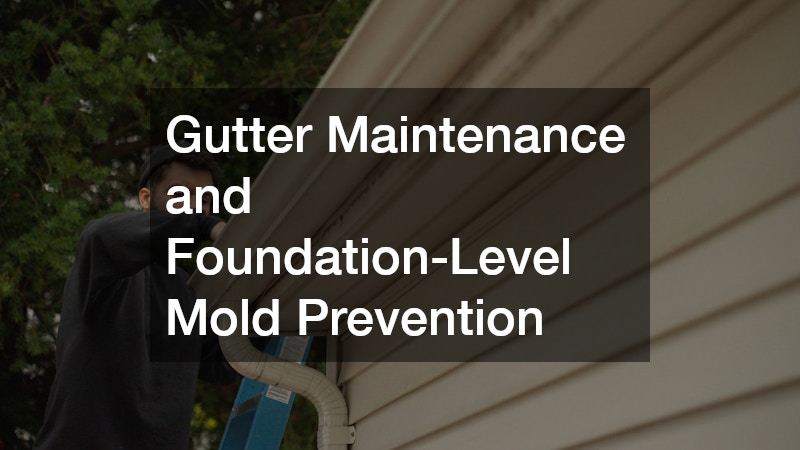
Clogged or damaged rain gutters send water cascading down your siding and pooling right at your foundation instead of directing it safely away from your home. A single inch of rain falling on an average roof can produce hundreds of gallons of runoff, and without a properly functioning gutter system, all of that water finds the path of least resistance—straight down your exterior walls and into the soil surrounding your foundation.
Over time, this constant moisture exposure softens siding, promotes mold growth, and increases the humidity level in basements and crawl spaces below. Saturated soil also expands and contracts with temperature changes, which can lead to hairline cracks in the foundation that become entry points for water and, eventually, mold spores.
Downspouts deserve just as much attention as the gutters themselves. Extensions should carry water at least three to five feet away from the house, since discharging water directly at the base of the foundation defeats the purpose of the gutter system entirely.
Seasonal inspections matter too. Checking gutters after major storms and during fall leaf-drop, clearing debris, and confirming that gutters are pitched correctly for proper drainage can prevent the kind of chronic dampness that turns basements into breeding grounds for indoor mold and compromises the air quality throughout the rest of the home.
Cleaning and inspecting your rain gutters twice a year — once in late spring and again after autumn leaf drop — is one of the simplest ways to protect your indoor air quality. During each check, look for granules from asphalt shingles piling up in the trough, rust spots, or seams pulling apart, since these small issues often precede bigger drainage failures. Downspouts should extend at least four to six feet from your foundation, and adding splash blocks or flexible extenders helps direct water further away on sloped or compact lots.
Gutter guards can reduce debris buildup between cleanings, though they still require occasional checks to make sure water is flowing freely, particularly in areas with heavy pine needles or seed pods that can mat over the mesh. Even with guards installed, a quick rinse with a hose every few months confirms water is exiting the downspout rather than backing up unnoticed.
Addressing sagging or improperly pitched gutters early prevents the kind of chronic dampness that leads to costly mold remediation. A properly pitched gutter should drop about a quarter-inch for every ten feet of run toward the downspout; anything flatter tends to pool water and invite rot in the fascia board behind it. Left unchecked, that trapped moisture can seep into the foundation walls or crawl space, creating the humid, dark conditions where mold spores thrive and eventually migrate indoors through cracks and vents.
Landscaping Materials and Dust Control Near Entryways
The materials you choose for walkways, garden beds, and ground cover directly affect how much dust and debris makes its way to your doors. Loose gravel and bare dirt paths kick up fine particles with every step, while mulch that breaks down too quickly can become a breeding ground for mold spores that travel on the breeze.
Choosing landscape materials designed for durability and lower dust output, such as larger decorative stone, rubber mulch, or well-compacted paver systems, cuts down significantly on what gets tracked or blown into your home. Placing a buffer zone of these materials near entry points also reduces the amount of soil and organic debris that ends up on shoes and paws. Refreshing mulch and regrading uneven walkways every year or two keeps this dust source from creeping back.
Improving your indoor air quality does not always start with a new filter or purifier; often, the real solution is outside your front door. From irrigation habits to roofing, fencing, flooring, and landscaping, each choice you make around your property either supports cleaner air indoors or quietly works against it. Take a walk around your home this weekend and look for the moisture, dust, and airflow issues covered above, then tackle the most pressing one first. Small, targeted exterior upgrades often deliver the biggest improvement in how fresh and healthy your indoor air feels.