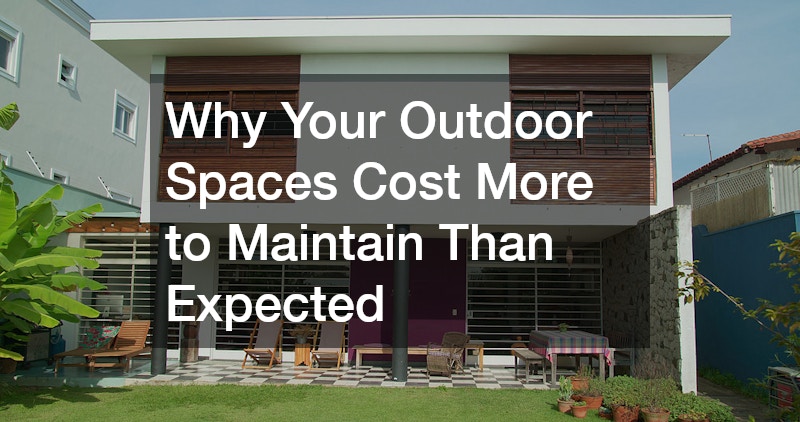

You budgeted for a tidy lawn and a few flower beds, but somehow your outdoor space has turned into one of the biggest line items in your home maintenance budget. It happens to nearly every homeowner because outdoor upkeep involves far more moving parts than people initially realize. From irrigation and lighting to structural elements like walls and patios, each feature has its own maintenance schedule and cost. Understanding where the money actually goes is the first step toward getting your outdoor spending under control.
The Hidden Complexity of Basic Yard Upkeep
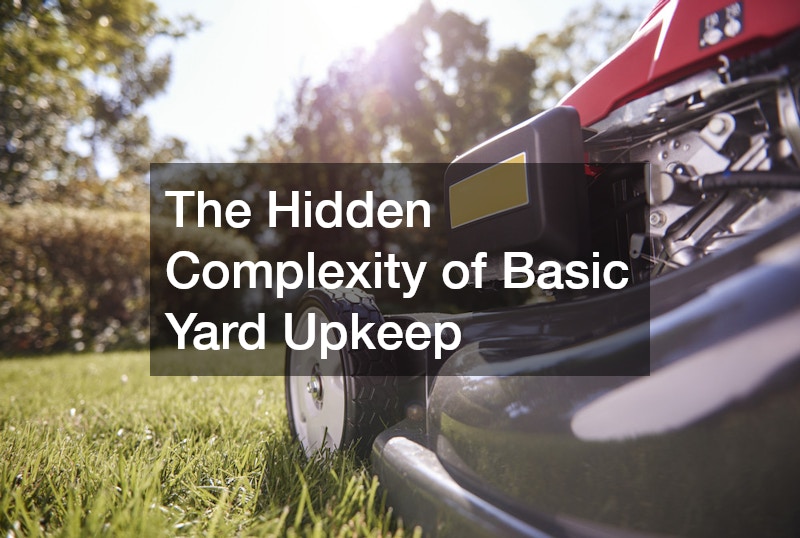
Many homeowners assume yard care means mowing the grass once a week and calling it done, but that mindset almost always leads to budget surprises. A healthy lawn requires consistent attention throughout the growing season, not just occasional trims. When homeowners skip steps like edging, aeration, or seasonal cleanup, small problems compound into expensive fixes later. What looks like a simple task on the surface is actually a system of interdependent chores that add up quickly.
The frequency of care matters just as much as the tasks themselves. Grass that grows unchecked for even two or three extra weeks becomes harder to manage and more likely to develop bare patches or weed problems. This is why many homeowners eventually turn to a professional lawn mowing service to keep things consistent, since skipping even one cycle can undo weeks of progress.
- Uneven mowing height stresses grass roots and invites weeds
- Missed edging creates a ragged, unfinished appearance
- Grass clippings left too long can smother healthy growth
- Seasonal debris cleanup is often overlooked until it piles up
Soil Health and Nutrient Depletion Over Time
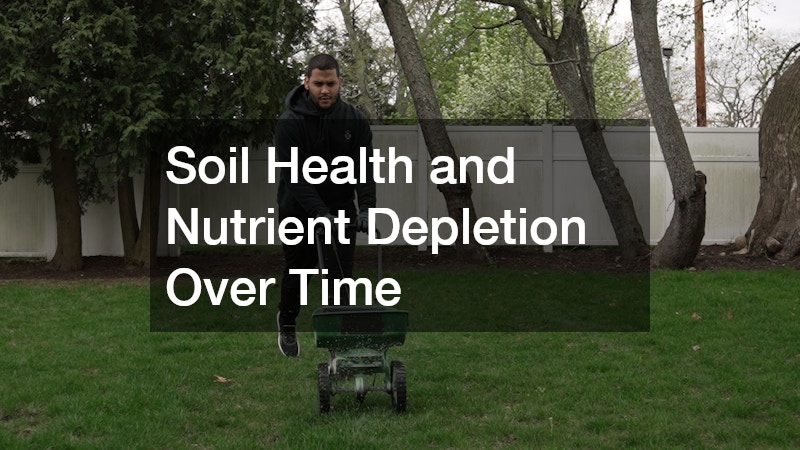
Soil is a living system, and it depletes faster than most homeowners expect, especially in yards with heavy foot traffic or older turf. A healthy lawn relies on a steady supply of nitrogen, phosphorus, and potassium, along with a soil pH between roughly 6.0 and 7.0. Once those levels drift outside that range, grass roots struggle to absorb nutrients even if fertilizer is applied regularly. Nutrients get used up by the grass itself, washed away by heavy rain, or locked up in soil that has become too acidic or alkaline over time. Compacted soil from mowers, foot traffic, or play equipment makes the problem worse by blocking water and air from reaching the root zone. Many homeowners don’t realize a lawn needs aeration every one to three years just to keep nutrients and moisture moving where they’re needed. Without replenishment, grass becomes thin, patchy, and more vulnerable to pests and disease, which often leads to costlier reseeding or sod replacement down the line. A basic soil test, often available for $15 to $50, can reveal these deficiencies before they show up as dead patches. This is one of the most overlooked costs of a healthy-looking lawn, since the fixes are invisible until the yard already looks like it’s failing.
Many homeowners try a single bag of store-bought fertilizer and wonder why results are inconsistent. The problem is usually a lack of information: without knowing your soil’s pH or nutrient levels, you’re essentially guessing at what your lawn needs. Nitrogen, phosphorus, and potassium deplete at different rates depending on grass type, rainfall, and how often you mow, so a generic all-purpose blend rarely addresses the actual deficiency. Professional lawn fertilizing services typically test soil conditions first and apply treatments in phases tailored to the season, which produces more reliable results than a one-time application. A spring application might focus on root development, while a fall treatment builds cold hardiness and replenishes nutrients lost over summer. This phased strategy also accounts for local soil composition, since clay-heavy or sandy soils absorb and retain nutrients very differently. This targeted approach actually saves money over time because it prevents the cycle of reseeding and repairing damaged turf. Homeowners who skip soil testing often overcorrect with excess fertilizer, which can burn grass or run off into gardens and storm drains, creating additional cleanup costs. A properly managed soil program, by contrast, reduces the need for costly turf replacement and keeps your lawn resilient against drought, pests, and disease.
Structural Wear on Walls and Slopes

If your property has any change in elevation, there is a good chance structural landscaping features like retaining walls are quietly doing a lot of work to keep soil, mulch, and water where they belong. Over time, these structures face constant pressure from shifting soil, moisture, and freeze-thaw cycles, which can cause bulging, cracking, or leaning. Left unaddressed, a small crack can turn into a full collapse that damages nearby landscaping or even structures.
The cost of maintaining these structures depends heavily on materials and drainage design. A well-built slope support system includes proper backfill and drainage pipes that relieve water pressure before it becomes a structural issue. Homeowners who skip regular inspections often end up paying far more for emergency repairs than they would have for routine maintenance checks.
- Cracks wider than a quarter inch often signal drainage failure
- Leaning or bulging sections need immediate professional evaluation
- Poor drainage is the leading cause of structural failure on sloped ground
- Vegetation growing through joints can accelerate deterioration
Lighting Systems That Fail Quietly
Outdoor lighting adds safety and curb appeal, but it is also one of the most neglected systems in a yard because problems are not always visible during the day. Wiring can corrode underground, fixtures can fill with moisture, and timers or sensors can malfunction without any obvious warning sign. A connector buried under mulch or soil can slowly oxidize for months before it finally fails, and by then the damage often extends beyond that single junction point. Low-voltage systems are especially prone to quiet failures because a single break in the line can cause every fixture downstream of it to go dark. Homeowners often assume the transformer is broken when the real culprit is a nicked cable that a shovel or aerator clipped months earlier. Diagnosing this usually requires a multimeter and a willingness to dig along the cable run, which is why many people default to calling an electrician rather than troubleshooting it themselves. Photocells and timers add another layer of complexity, since a dirty or misaligned sensor can leave lights running all day or never turning on at night. Either scenario quietly inflates electric bills or leaves a property dark and less secure. Homeowners often do not notice until several lights fail at once, which usually points to a larger electrical issue rather than a single bulb problem, and by that point a simple fixture swap has turned into a full system repair.
Addressing these issues early is far cheaper than waiting for a full system failure. Outdoor lighting repairs are often quick and inexpensive when caught in the early stages, such as replacing a corroded connector, resealing a fixture, or swapping out a failing transformer before it takes down an entire circuit. These fixes typically run anywhere from $50 to $150, depending on the fixture and how accessible the wiring is. Waiting too long, however, can mean rewiring entire sections of the yard, which is a much bigger expense. Once moisture works its way into buried wire splices or a transformer overloads repeatedly from a hidden short, the damage tends to spread to neighboring fixtures on the same line. At that point, homeowners are often looking at $500 to $2,000 or more to dig up, replace, and reroute wiring across the affected zone. It helps to watch for early warning signs: flickering lights, fixtures that dim as the night goes on, or one section of the yard going dark while the rest stays lit. Each of these can indicate a loose connection, water intrusion, or a transformer nearing the end of its life. Catching them at this stage keeps outdoor lighting repairs simple rather than turning them into a full electrical overhaul.
Design Choices That Create Long-Term Costs
The way a yard is originally designed has a lasting impact on how much it costs to maintain. Overly complex layouts with tight corners, steep grades, or hard-to-reach garden beds require more labor and specialized equipment to manage properly. Mowing crews often charge extra for yards with numerous obstacles or narrow access points, since push mowers and hand trimming take far longer than a simple pass with a riding mower. A poorly planned retaining wall, for instance, can create drainage headaches and erosion issues that ripple through the rest of the yard. If a wall lacks proper backfill, weep holes, or drainage tile, water pressure builds up behind it, eventually causing bowing, cracking, or outright collapse. Repairing or rebuilding a failed retaining wall can run into thousands of dollars, far more than the cost of installing it correctly the first time. Grade changes matter too. Yards with steep slopes are more prone to soil erosion, which washes away mulch, damages plantings, and requires ongoing regrading or the addition of erosion-control measures like terracing or ground cover. Simpler, more functional designs tend to age better and cost less to keep looking sharp year after year. Straight planting beds, gentle grading, and clear equipment access reduce both the time and specialized skill needed for upkeep, which translates directly into lower bills over the life of the landscape.
This is where working with landscape designers early in the process pays off. A thoughtful design accounts for drainage patterns, sunlight exposure throughout the day, soil quality, and plant selection that matches the local climate zone, all of which reduce the need for constant intervention later. Skipping this step often means homeowners inherit a yard that fights against its environment instead of working with it. Consider drainage as one example: a poorly graded yard can send water pooling toward a foundation or patio, leading to erosion, cracked hardscaping, or even basement leaks that cost thousands to repair. A landscape designer will map out slope and water flow before a single plant goes into the ground, often incorporating swales, French drains, or permeable pavers to direct water safely away. Plant selection carries similar weight. Choosing a shade-loving fern for a sun-drenched bed, or a moisture-hungry hydrangea for a dry, exposed slope, sets homeowners up for a cycle of replacement, extra watering, and pest treatments. Species matched to the site’s actual sun exposure and soil conditions typically need less fertilizer, less supplemental irrigation, and fewer replacements after a hard winter or dry summer. Even hardscape placement matters here. Patios, walkways, and retaining walls positioned without regard to tree root growth or seasonal freeze-thaw cycles can crack or shift within a few years, turning what should be a decades-long investment into a recurring repair line item.
The True Price of Full-Service Yard Renovations
When homeowners decide to overhaul their outdoor space, they often underestimate how many moving parts a renovation actually involves. Grading, drainage, planting, hardscape installation, and irrigation all need to work together, and mistakes in one area can cause expensive problems in another. This is why full outdoor renovation projects almost always cost more than initial estimates suggest.
Hiring experienced landscape contractors can actually reduce long-term costs, even though the upfront price may seem higher than a DIY approach. These professionals understand how to sequence a project correctly, which prevents costly rework down the line. A rushed or poorly planned renovation often needs to be redone within just a few years.
- Grading mistakes can cause water pooling near the foundation
- Skipping soil testing before planting leads to poor plant survival
- Irrigation installed after hardscaping often costs more to retrofit
- Poor sequencing can damage newly installed features
Patios, Walkways, and Structural Additions
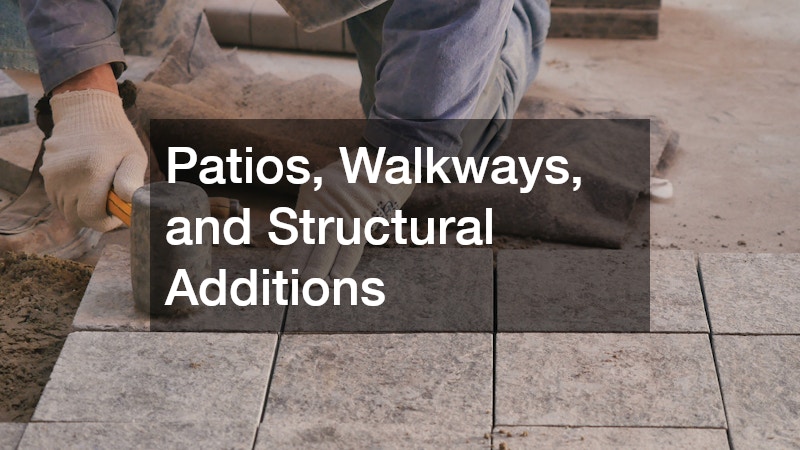
Hard surfaces like patios, walkways, and fire pit areas are durable, but they are not maintenance-free. Settling soil, freeze-thaw cycles, and water runoff can cause pavers to shift or concrete to crack over time. Left unchecked, these small shifts can become tripping hazards or lead to more expensive structural repairs.
Because these projects require precise grading and drainage planning, many homeowners bring in a hardscaping contractor rather than attempting the work themselves. Proper base preparation is the single biggest factor in how long a hard surface lasts, and cutting corners here almost always leads to premature repairs. Getting this right the first time is far more cost-effective than fixing it later.
Turf Alternatives and Their Real Maintenance Trade-Offs
Many homeowners look into alternatives to traditional grass hoping to escape ongoing maintenance costs entirely. Artificial turf can significantly reduce watering and mowing needs, but it is not entirely maintenance-free. It still requires occasional rinsing, debris removal, and infill replenishment to keep it looking natural and performing well over time.
The upfront cost of installation is often higher than people expect, but the long-term savings can be significant for high-traffic areas or regions with water restrictions. Homeowners should weigh this investment against how much they currently spend on watering, mowing, and reseeding each year. For some properties, a hybrid approach that combines natural lawn areas with synthetic surfaces offers the best balance.
- Infill needs replenishing every few years to maintain cushioning
- Drainage underneath turf must be properly installed to avoid pooling
- Heat retention can be an issue in high-sun areas
- Regular rinsing prevents odor buildup from pets
Outdoor maintenance costs add up because a yard is not one single project but a collection of interconnected systems, each with its own upkeep needs. Once homeowners understand where these costs come from, it becomes much easier to budget accurately and avoid surprise expenses. The smartest next step is auditing your own outdoor space section by section to identify which systems need attention now versus later. With a clear plan in place, you can prioritize repairs and maintenance in a way that protects both your property and your wallet.